Dolphins embrace youth and untapped potential in Jon-Eric Sullivan’s early free agency strategy Nueva estrategia en Miami: los Dolphins apuestan por talento joven y valor oculto en la agencia libre.
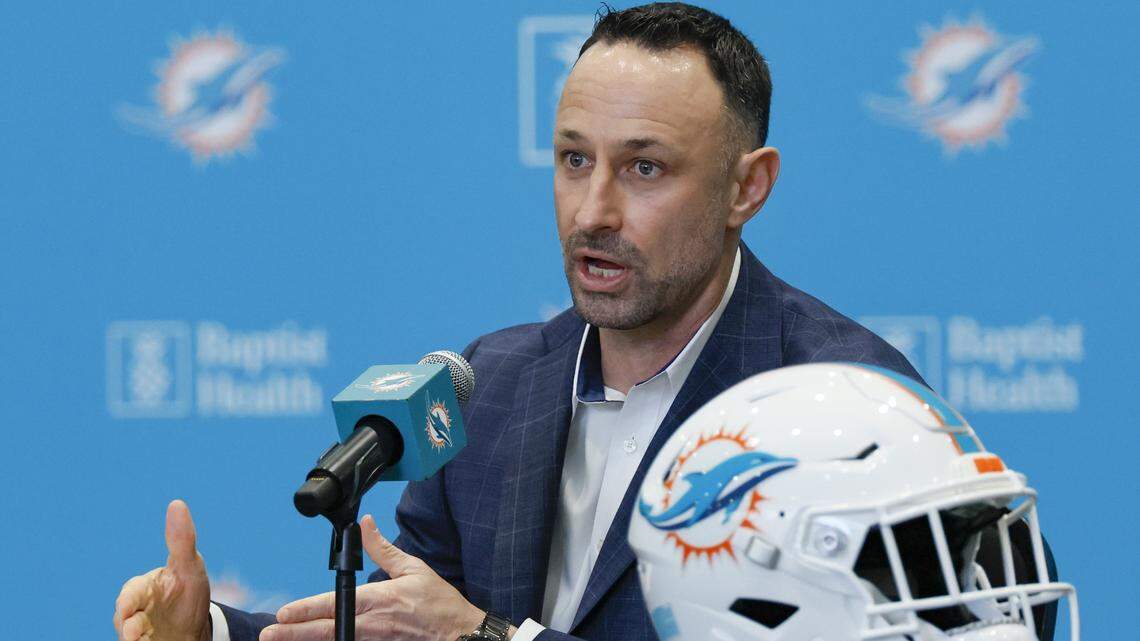
MIAMI — One week into the NFL free agency period, the roster-building philosophy of new Miami Dolphins general manager Jon-Eric Sullivan is beginning to take shape. The early moves suggest a strategy centered on youth, untapped potential, and creating internal competition across the roster.
In his first wave of acquisitions, Sullivan has targeted players in their twenties who were once productive starters or high draft picks but have recently seen their production decline due to injuries, reduced playing time, or changing roles on their previous teams.
Among those additions are wide receivers Tutu Atwell and Jalen Tolbert, both of whom had strong seasons in 2024 before their impact diminished last year. Atwell recorded 42 receptions for 562 yards that season, while Tolbert finished with 49 catches for 610 yards and seven touchdowns. If the Dolphins can get similar production from both players, they could provide significant value as rotational weapons in Miami’s offense.
A similar approach applies to cornerback Marco Wilson, a South Florida product who started for the Arizona Cardinals in 2022 and recorded three interceptions that year. Although his performance has declined since, Miami believes he still has room to develop. Wilson and Tolbert are both 27 years old, while Atwell is 26.
Betting on former second-round picks
Another notable trend in Sullivan’s early tenure is his willingness to take chances on former second-round draft selections who may still have untapped upside. In his first two months on the job, the Dolphins have added five such players: pass rushers Joshua Uche and David Ojabo, wide receivers Tutu Atwell and Terrace Marshall Jr., and safety Lonnie Johnson.
Uche, selected by New England in 2020, led the NFL last season in quarterback pressures per pass rush among players with comparable snap counts. Ojabo, drafted by Baltimore in 2022, has served as a reliable rotational defender after overcoming major injuries early in his career.
Atwell, chosen 57th overall in the 2021 draft, has averaged 14.6 yards per reception over his career — a number that would place him among the league’s most effective deep-threat receivers.
Youth as a priority
Age also appears to be a defining factor in Miami’s new roster strategy. So far, the Dolphins have signed or re-signed 27 players, and nearly all of them are in their twenties. Only one — safety Lonnie Johnson — has reached the age of 30.
The approach reflects Sullivan’s broader goal of building a younger roster capable of developing together while maintaining financial flexibility under the salary cap.
Versatility on the offensive line
Sullivan has also emphasized versatility, particularly along the offensive line. The Dolphins’ first addition to that unit was Jamaree Salyer, formerly of the Los Angeles Chargers, who has experience playing both guard and tackle.
Under the new regime, players who can fill multiple roles are viewed as more valuable, allowing the team to maintain roster flexibility throughout the season.
Draft priorities ahead
Despite the team’s activity in free agency, several key needs remain heading into the upcoming NFL Draft. The safety position is widely viewed as the Dolphins’ most pressing roster gap, with cornerback and edge rusher also likely areas of focus.
Miami currently has limited depth at safety, increasing the likelihood that the team will target that position during the early rounds of the draft.
Building while staying competitive
Even with a roster reset underway, the Dolphins are not approaching the upcoming season as a full rebuild. Instead, the organization aims to remain competitive while developing younger talent and reshaping its long-term financial structure.
The philosophy under Sullivan is clear: build a sustainable roster for the future while continuing to field a competitive team for fans.
With a mix of young players, calculated free agency bets, and strategic draft planning, the Dolphins appear to be entering a new phase that could shape the direction of the franchise in the coming years.
MIAMI — A una semana del inicio de la agencia libre de la NFL, comienza a tomar forma la nueva filosofía del gerente general de los Miami Dolphins, Jon-Eric Sullivan, quien está liderando una reconstrucción del roster basada en juventud, valor potencial y competencia interna.
En sus primeros movimientos al frente de la franquicia, Sullivan ha apostado por jugadores en sus veinte que en algún momento fueron titulares sólidos o selecciones altas del draft, pero cuyo rendimiento reciente ha disminuido por lesiones o menor participación en sus equipos anteriores.
Entre esos fichajes destacan los receptores Tutu Atwell y Jalen Tolbert, quienes tuvieron temporadas productivas en 2024 antes de ver reducido su impacto el año pasado. Atwell registró 42 recepciones para 562 yardas en 2024, mientras que Tolbert acumuló 49 recepciones, 610 yardas y siete touchdowns. Si ambos logran recuperar ese nivel, podrían convertirse en valiosas piezas dentro de la rotación ofensiva de Miami.
El mismo principio se aplica al esquinero Marco Wilson, formado en el sur de Florida, quien fue titular con los Arizona Cardinals en 2022 y registró tres intercepciones esa temporada. Aunque su rendimiento ha disminuido desde entonces, el cuerpo técnico de Miami cree que aún tiene margen de crecimiento. Wilson y Tolbert tienen 27 años, mientras que Atwell tiene 26.
Apostar por talento de segunda ronda
Otro patrón claro en la estrategia de Sullivan es la apuesta por antiguos picks de segunda ronda del draft que todavía podrían desarrollar su potencial. En sus primeros meses en el cargo, el ejecutivo ha incorporado a cinco jugadores con ese perfil: los pass rushers Joshua Uche y David Ojabo, los receptores Tutu Atwell y Terrace Marshall Jr., y el safety Lonnie Johnson.
Uche, seleccionado por New England en 2020, lideró la NFL la temporada pasada en presiones al quarterback por intento de pass rush entre jugadores con un número similar de snaps. Ojabo, elegido por Baltimore en 2022, ha sido un suplente sólido tras superar importantes lesiones en el inicio de su carrera.
Atwell, elegido en el puesto 57 del draft de 2021, posee un promedio de 14.6 yardas por recepción en su carrera, una cifra que lo ubicaría entre los mejores receptores profundos de la liga.
Juventud como prioridad
La edad también parece ser un factor clave en la construcción del nuevo plantel. Hasta el momento, los Dolphins han firmado o renovado a 27 jugadores, y prácticamente todos se encuentran en sus veintes. Solo uno, el safety Lonnie Johnson, tiene 30 años.
El enfoque refleja una estrategia clara: construir una base joven que pueda desarrollarse a mediano plazo sin comprometer el tope salarial del equipo.
Versatilidad en la línea ofensiva
Sullivan también ha dejado claro que valora la versatilidad, especialmente en la línea ofensiva. La primera incorporación en esa unidad fue Jamaree Salyer, procedente de Los Angeles Chargers, quien tiene experiencia tanto como guardia como tackle.
En la visión del nuevo régimen, los jugadores que pueden desempeñar múltiples posiciones tienen mayor valor dentro del roster y permiten mayor flexibilidad durante la temporada.
Necesidades de cara al draft
Aunque el equipo ha sido activo en la agencia libre, todavía existen áreas críticas que deberán reforzarse en el próximo draft. La posición de safety aparece como la necesidad más urgente del roster, seguida por cornerback y pass rusher.
Actualmente, Miami cuenta con pocos safeties experimentados bajo contrato, lo que hace probable que la franquicia utilice alguna de sus selecciones en los primeros días del draft para reforzar esa área.
Construir mientras se compite
A pesar de la reestructuración del plantel, los Dolphins no planean iniciar una reconstrucción completa que implique sacrificar una temporada. La organización busca mantenerse competitiva mientras desarrolla talento joven y ajusta su estructura financiera.
El objetivo, según la filosofía de Sullivan, es construir un equipo sostenible a largo plazo sin dejar de ofrecer un producto competitivo para los aficionados.
Con una combinación de juventud, apuestas calculadas y profundidad en varias posiciones, los Dolphins entran en una nueva etapa que podría definir el rumbo de la franquicia en los próximos años.